
Information on specific CPHI editions
CPHI Milan 2026
It will be the next major European edition of CPHI, positioned as a key event for exhibitors looking to strengthen their market presence, build new strategic partnerships, and connect with technical and commercial decision-makers across the pharmaceutical industry.
CPHI Frankfurt 2025
It was the European edition with the strongest international reach in recent years, standing out for its high concentration of global buyers, CDMOs, and pharmaceutical companies, and for its strong focus on business meetings and real opportunity generation for exhibitors.
What is CPHI?
CPHI is one of the world’s most recognized B2B event brands for the pharmaceutical industry, focused on connecting buyers and suppliers across the entire supply chain—from ingredients and development and manufacturing services to process technology, packaging, and digital solutions. Its value proposition combines in-person regional events with year-round connectivity and content.
Under the CPHI umbrella, flagship shows (in Europe, the Americas, and Asia) coexist with regionally focused editions, along with digital tools for networking, scheduling, floor plans, and matchmaking through its event ecosystem (event app / event planner).
CPHI positions itself as a meeting point “at the heart of pharma,” bringing together the professionals who make medicines possible: suppliers, pharma companies, CDMOs, technologists, engineering firms, packaging specialists, regulatory and quality experts, logistics providers, and increasingly, digital solutions aimed at accelerating go-to-market and improving efficiency and compliance.
CPHI’s strength lies in two key factors. First, the scale and diversity of both supply and demand, enabling companies to compare suppliers, enter new markets, and strengthen existing relationships. Second, its end-to-end approach: CPHI goes beyond “ingredients” to cover the full ecosystem, with show zones that typically include outsourcing, bio, machinery and processing, and formulation and packaging, depending on the edition.
Who organizes CPHI?
CPHI is part of Informa Markets (Informa PLC), which operates as a B2B event organizer and connection platform for specialized markets. This matters because it sets clear standards in terms of event professionalism, exhibitor services, and a well-defined strategy that integrates in-person and digital experiences.
Where CPHI “lives”: flagship events and key regions
| Brand / Event | Geographic reach | City / Country | Event type | Main sector | Official link |
|---|---|---|---|---|---|
| CPHI Global / Europe | Europe / International | Rotating | Annual in-person trade show | Full pharmaceutical value chain | Official website |
| CPHI Americas | North & Latin America | Rotating | Annual in-person trade show | Pharmaceutical industry & networking | Official website |
| CPHI China | China | Multiple cities | Annual in-person trade show | Ingredients, bio, and pharma machinery | Official website |
| CPHI India | India / South Asia | Rotating | Annual in-person trade show | Ingredients, outsourcing, and processing | Official website |
| CPHI Japan | Japan | Rotating | Annual in-person trade show | Pharmaceutical supply chain | Official website |
| CPHI South East Asia | Southeast Asia (ASEAN) | Rotating | Annual in-person trade show | Regional pharma ecosystem | Official website |
| CPHI Korea | South Korea | Rotating | Annual in-person trade show | Pharma and biopharma | Official website |
| CPHI Online / Digital | Global | Online | Always-on digital platform | Content, sourcing, and networking | Official website |
| Events by CPHI (Event App) | Global | Online | Planning tool | Agenda, meetings, and floor plan | Official website |
Which sectors and solutions typically carry the most weight at CPHI?
Pharmaceutical ingredients and excipients
The foundation of the event: APIs, excipients, specialties, and related solutions focused on quality, compliance, and supply continuity.Outsourcing and services (CDMO / CMO / CRO)
Development, scale-up, manufacturing, analytics, validation, and third-party packaging. Highly geared toward one-to-one meetings and deal-making.Biopharma and bioprocessing
A fast-growing presence across multiple editions, covering capabilities, technologies, and partners for biologics.Machinery, process technology, and equipment
Industrial and engineering solutions for pharmaceutical manufacturing and process control.Formulation, packaging, and drug delivery
Materials, packaging, serialization, devices, and services that support taking products to market.Digital, data, and year-round engagement
The always-on connectivity layer—company and product discovery, content, and networking tools—that reinforces the in-person experience.Exhibitor and Attendee Profile: Who You’ll Meet
CPHI is designed to bring together decision-makers and technical teams across the entire pharma value chain. Depending on the market, you’ll typically meet:
-
Procurement and sourcing teams (ingredients, materials, and services).
-
Quality, regulatory, and compliance professionals.
-
Formulation development and technology transfer teams.
-
Industrial operations, engineering, and maintenance teams.
-
Innovation, business development, and partnership teams.
-
Specialized suppliers (from ingredients to machinery and digital solutions).
The practical takeaway: if your offering is built on trust—quality, traceability, audits, supply assurance—CPHI is an environment where the in-person format strongly helps accelerate that “yes, let’s have a serious conversation.”
Practical Tips to Get the Most Out of CPHI
Make your value proposition “audit-ready”
In pharma, the typical friction isn’t price—it’s risk. Reduce uncertainty by clearly communicating:
-
Scope of capabilities (what you do / what you don’t).
-
Certifications and quality systems (without overwhelming).
-
Typical lead times and flexibility.
-
Change management and traceability approach.
This is what turns a 15-minute meeting into a serious business conversation.
Don’t try to sell everything—sell 2–3 stories
CPHI is not the place to walk through your entire catalog. Choose two or three key messages and repeat them consistently.
Design your follow-up before you travel
Define templates and rules:
-
What goes out after 2 days, 7 days, and 21 days.
-
Who schedules the next meeting.
-
How information is logged so nothing gets lost.
Sustainability: make it real and visible
CPHI actively promotes sustainability as part of its mission. Bringing a booth designed around reusability
It’s a broad ecosystem: beyond ingredients, CPHI typically includes outsourcing (CDMOs/CROs), bioprocessing, machinery and equipment, and formulation and packaging, depending on the edition.
It depends on the target country. CPHI runs regional editions in Japan, India, China, Southeast Asia, and Korea, each with its own profile and local network. Start with the official portfolio and prioritize the events where your buyers are.
There is no universal minimum. In pharma, a small but well-designed booth (clear message + proof points + meeting area) can perform better than a large one with no clear storyline. The key is your objective and your meeting agenda.
That said, it’s also true that the larger the booth, the greater the potential for visual impact.
It depends on your objectives, target audience, and budget. Costs vary based on booth size, location on the show floor, additional services, build-up, and related expenses. Request a detailed quote from the organizer and prepare a clear cost plan.
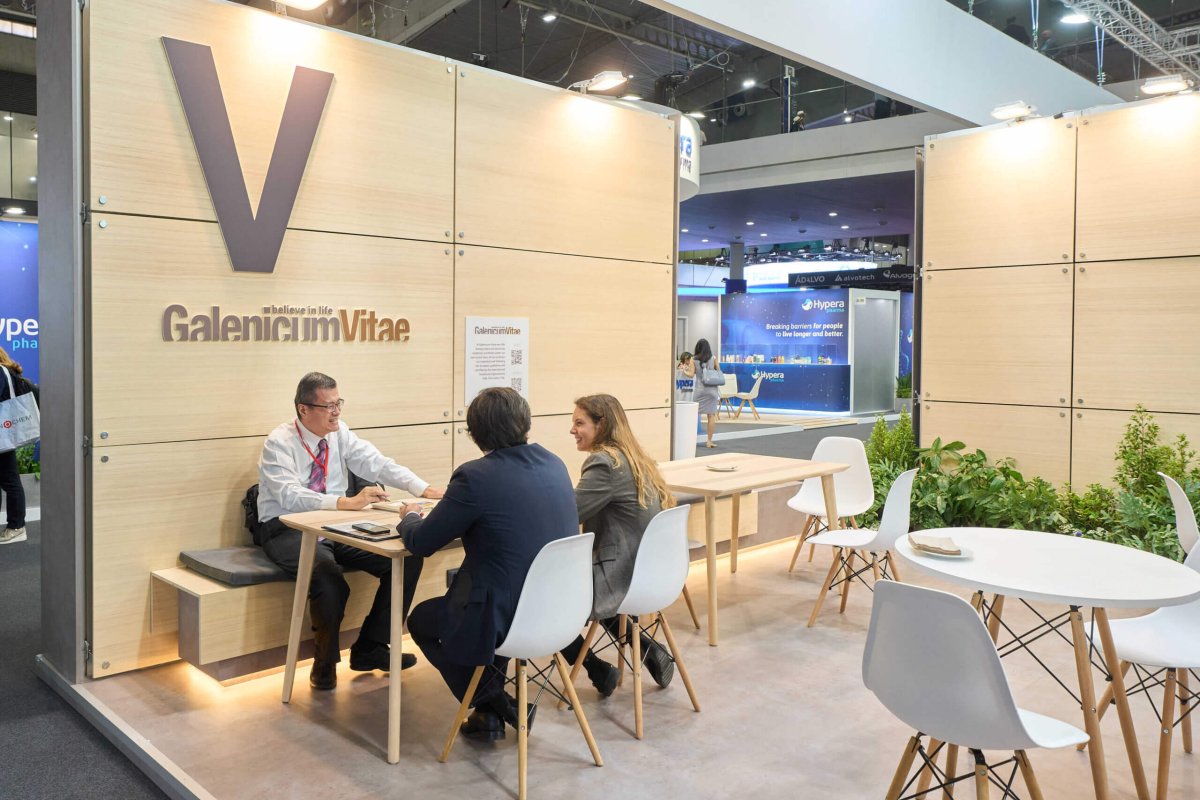
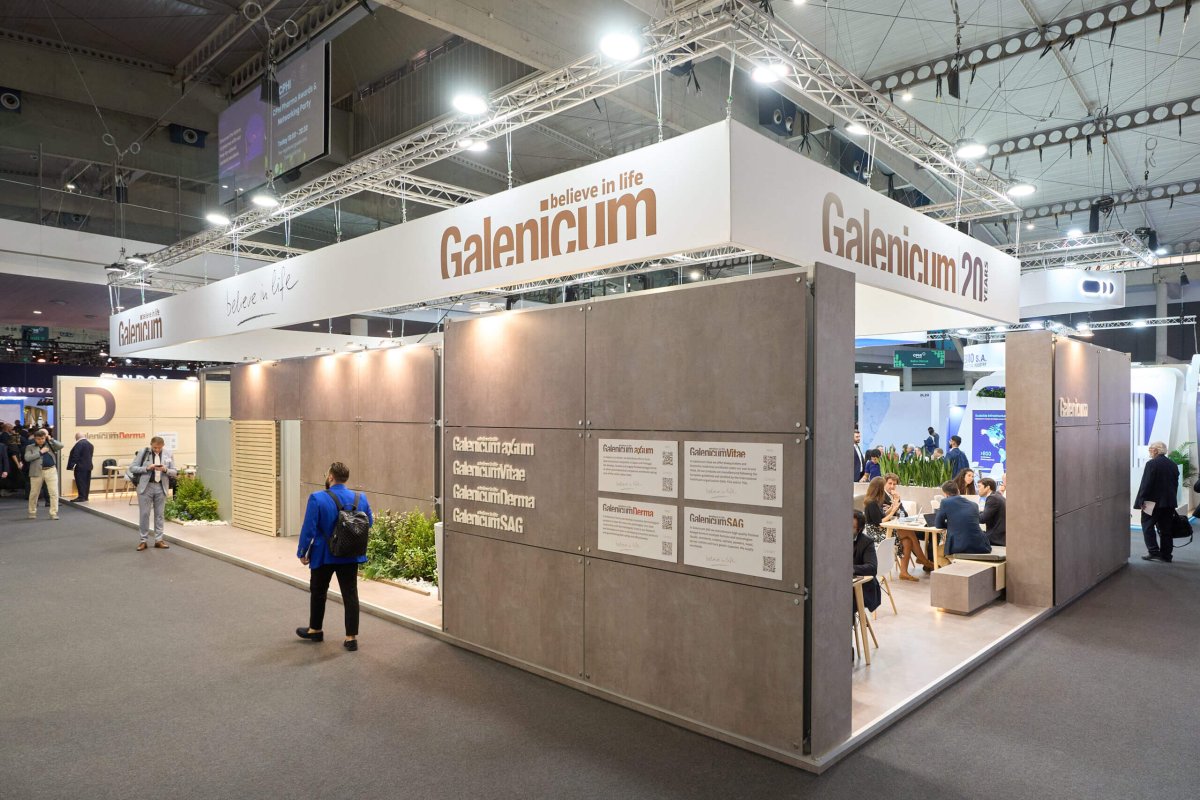
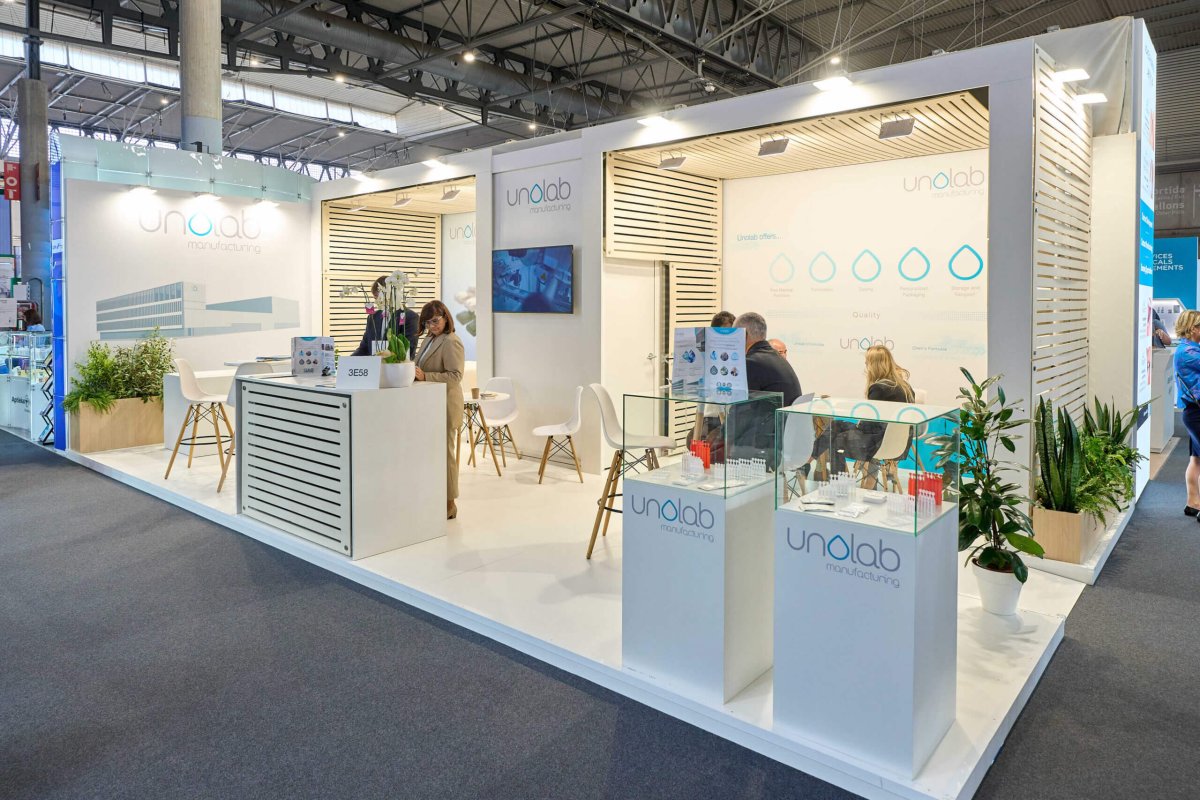
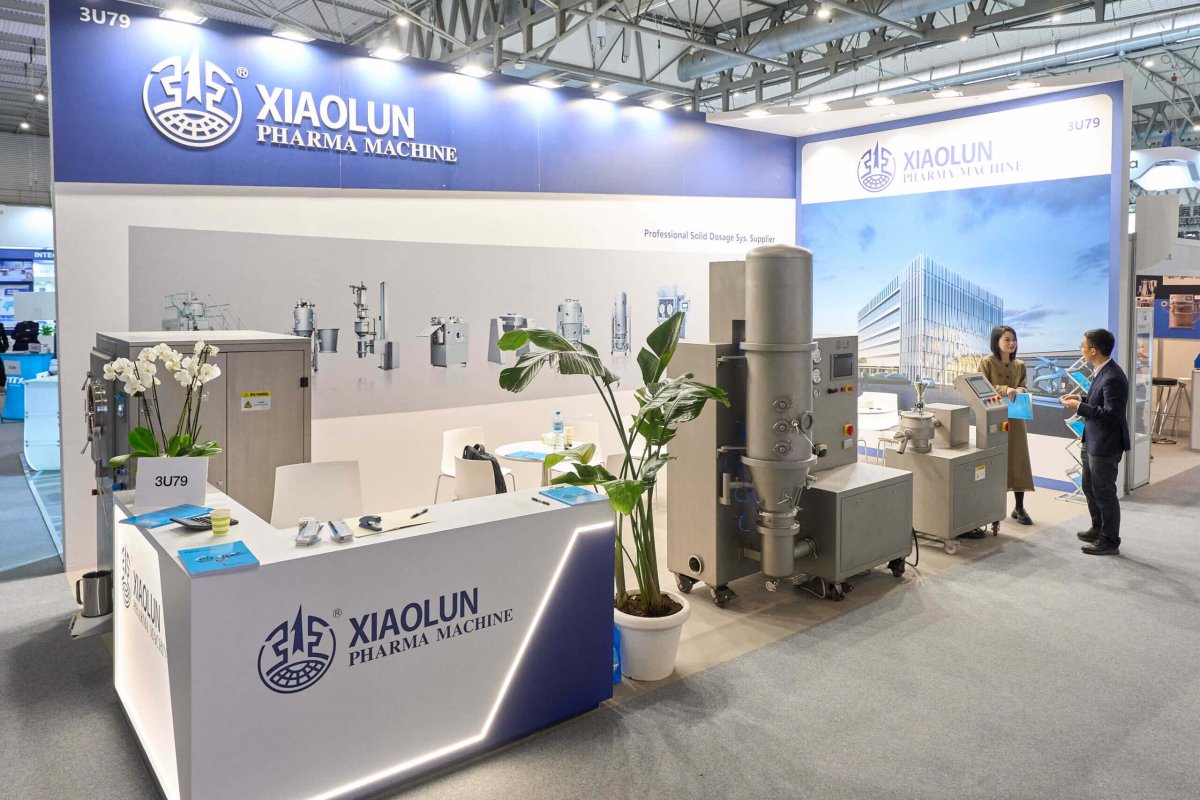
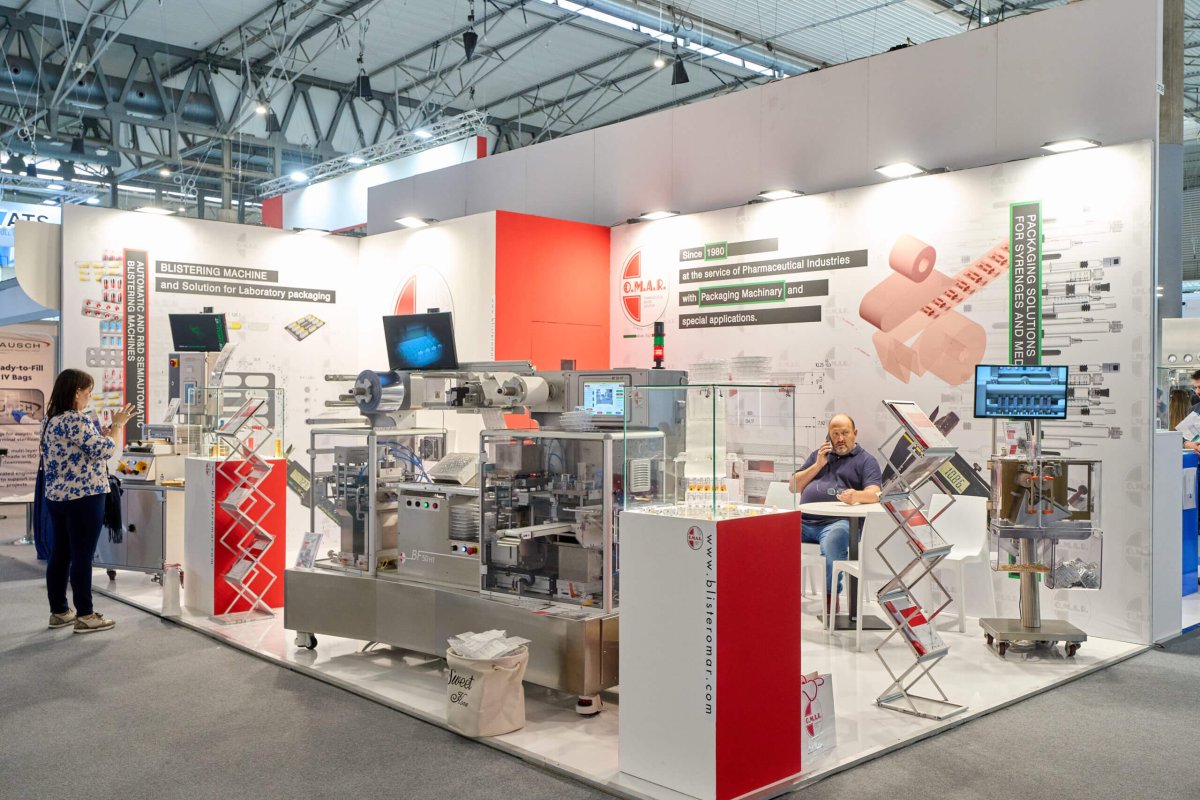
Booths at past CPHI editions
Do you need help managing your exhibition stand?
We’re here to make sure everything runs smoothly.
Let us know what you need, and we’ll get started right away.

Our services
Contact
ISO 9001 and 14001 certified
Certified for CO2 offsetting
Eventsoft certified

AFE Seal (Recommended supplier)